Steadfast
Chandelier Installation in Nigeria: How to Install a Chandelier Safely at Home.

Chandelier Installation in Nigeria: How to Install a Chandelier Safely at Home.


O. Oyinkansola13 min read

Installing a chandelier can instantly transform an ordinary room into a stylish and welcoming space. However, choosing the right fitting is only the first step. Proper chandelier installation is essential for safety, appearance, and long-term performance, especially when dealing with different ceiling types and electrical systems.

Whether you are moving into a new home, upgrading your home lighting, or replacing an old fixture, this guide explains what to consider before you install a chandelier. From choosing the right size and checking ceiling support to determining the appropriate height and deciding when to hire a professional, you will learn the key steps involved and how to avoid costly mistakes.

What Should You Check Before Installing a Chandelier?

Before you install a new fixture, take time to assess the room, the existing electrical point, and the condition of the ceiling. A chandelier should complement the size and layout of the space rather than simply fill an empty electrical point.

Start by considering where the fitting will go. A large design may work beautifully above a dining table or in a spacious living room, but the same fitting could overwhelm a smaller bedroom. Consider the room's proportions, furniture placement, and the amount of illumination required.

You should also inspect the existing support and electrical arrangement. If you are replacing an existing ceiling light, do not assume that its support can carry a heavier decorative fitting. This is particularly important when the chandelier is heavy or when the ceiling has a decorative finish such as POP.

What Measurements Matter?

Proper measurement helps you choose a fitting that looks proportional and leaves enough clearance for people using the room. Measure the room, available ceiling space, and the area where the fitting will be positioned.

The ceiling height is also important. A low ceiling may require a compact flush or semi-flush design, while a taller room can accommodate a suspended chandelier with a longer drop.

Taking these measurements before purchasing helps prevent the common mistake of choosing a fitting that looks attractive but is unsuitable for the space.

Chandelier Installation in Nigeria: How to Install a Chandelier Safely at Home.

How Do You Choose the Right Chandelier for Your Room?

The right chandelier should provide a good balance between aesthetics, size, brightness, and function. A decorative fitting can become a major focal point, but it should still work with the rest of the interior.

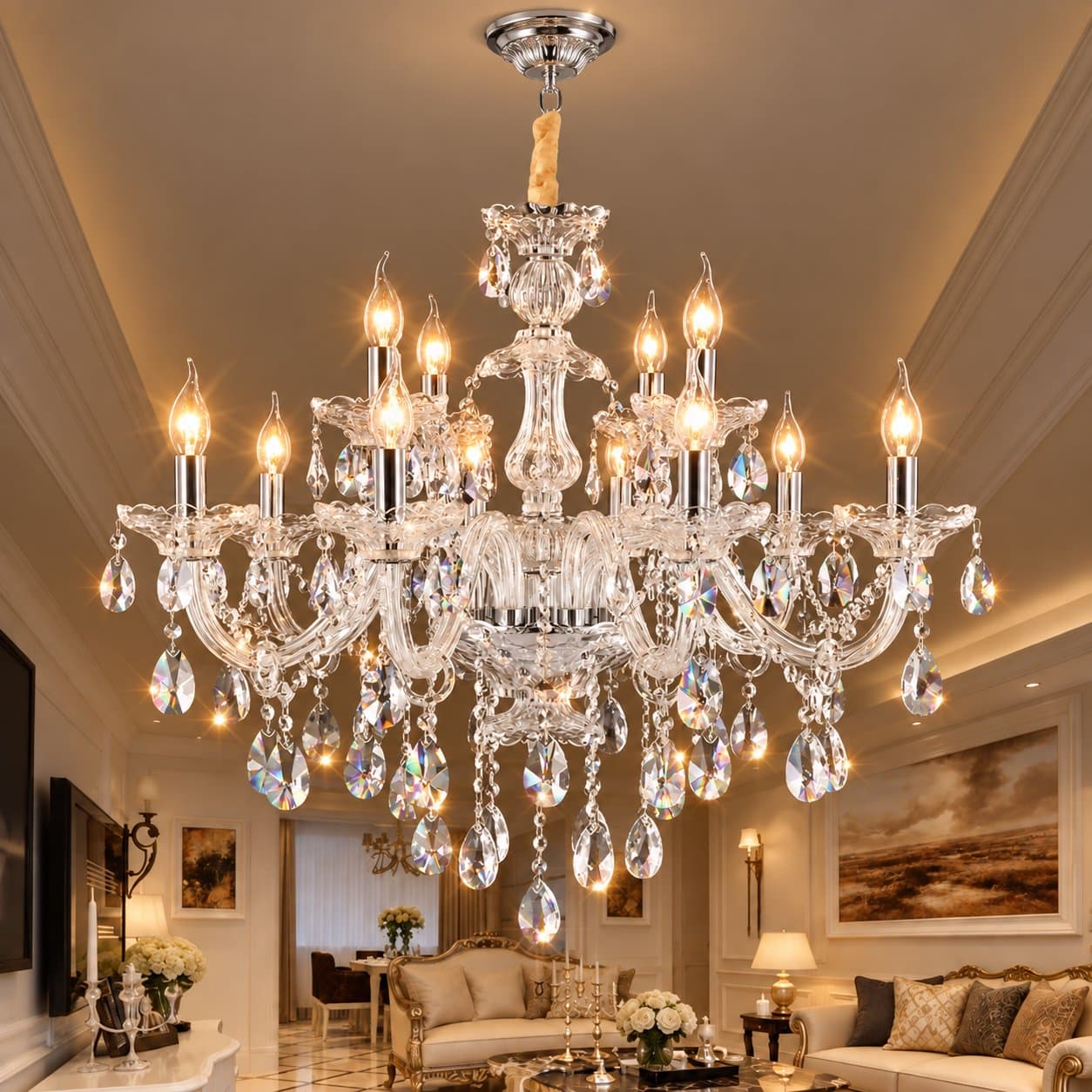
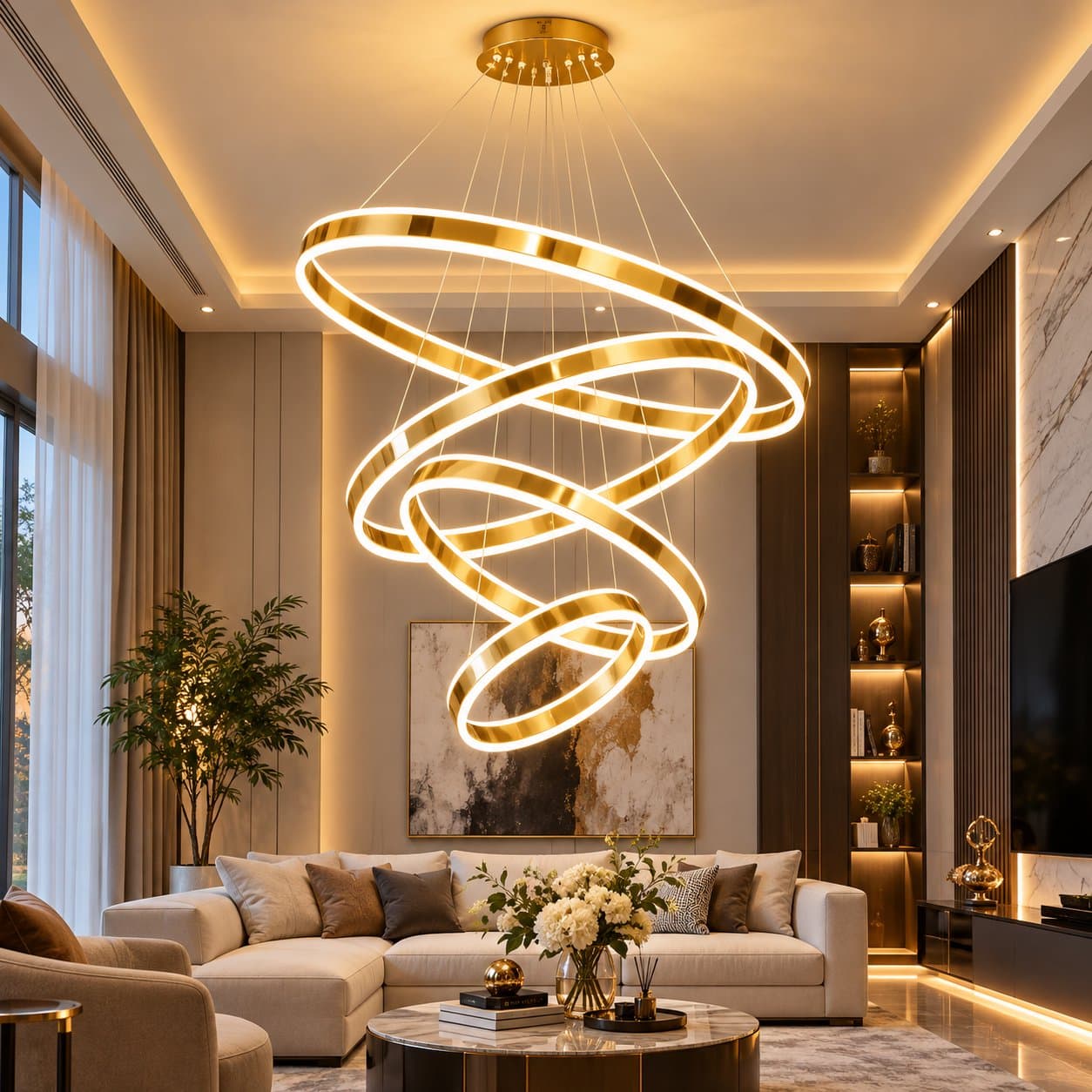
For example, a sophisticated crystal design may suit a formal dining area, while a contemporary geometric model may work better in a modern living room. Your choice should complement the room's furniture, finishes, wall colors, and overall style.

Pay attention to the color and finish as well. Gold, black, chrome, and other finishes can create very different effects. The fitting should complement the room rather than compete with other decorative features.

What About Bulbs and Brightness?

The type of bulb used can affect the appearance and atmosphere of the room. Check the manufacturer's specifications and make sure the recommended lamp type and wattage are appropriate for the fitting.

For many residential spaces, warm white creates a cozy atmosphere, while neutral white can provide a cleaner and more functional appearance. The best option depends on the room and the mood you want to create.

The goal is not simply maximum brightness. The best lighting provides adequate illumination while maintaining comfort and visual appeal.

How Do You Prepare the Ceiling Before Installation?

The ceiling is one of the most important parts of the installation because it must safely support the fitting. Before work begins, the installer should determine whether the existing ceiling box and support point are suitable for the weight of the new chandelier.

This becomes particularly important in homes with decorative ceilings. A decorative surface should not automatically be treated as structural support. The installer may need to locate suitable structural backing above the finished surface before securing the fitting.

The mounting hardware should also be inspected. A suitable mounting bracket must be securely attached to an appropriate support point and should be compatible with the fitting.

What If You Have a POP Ceiling?

POP ceilings are popular in Nigerian homes because they allow homeowners to create attractive patterns, recessed sections, and layered designs. However, the decorative material itself may not be suitable for carrying a heavy fitting.

If the chandelier is positioned on a POP section, the installer should determine where the structural support is located behind it. Additional preparation may be required before the fitting can be safely mounted.

Never judge the load-bearing ability of a ceiling by its appearance. The structural support should always be verified.

How Do You Safely Remove an Old Fixture?

If you are replacing an existing light, electrical safety should come first. The relevant supply must be isolated before the old fixture is handled.

The installer should turn off the power at the appropriate isolation point and verify that the circuit is no longer energized. Simply switching off the wall switch is not sufficient protection for electrical work.

Once the circuit has been safely isolated, a qualified professional can remove the old fixture and inspect the existing connection point.

This inspection can reveal loose connections, damaged components, unsuitable supports, or wiring that may not be appropriate for the new fitting.

Why Inspect the Existing Electrical Point?

An existing electrical box may have been installed for a lighter fixture and may not be suitable for a heavier chandelier. The installer should assess its condition and suitability before proceeding.

The circuit should also be considered, particularly if the new fitting has multiple lamps, dimming features, or other controls.

If anything about the existing installation is unclear, stop and have an electrician inspect it rather than proceeding based on assumptions.

Chandelier Installation in Nigeria: How to Install a Chandelier Safely at Home.

How Do You Install the New Mounting Bracket?

Once the existing support has been assessed, the installer can determine how the new fitting will be secured. The correct bracket and hardware should be selected according to the manufacturer's instructions and the structure supporting the fitting.

The installer should install the new mounting bracket securely to the appropriate structural support. It must be capable of supporting the fitting without movement or excessive stress.

This is particularly important for larger decorative fittings. A chandelier that moves, tilts, or pulls away from the ceiling is not simply an aesthetic problem. It may indicate inadequate support.

After the mounting system has been prepared, the suspension components, canopy, chain, rod, or other supplied hardware can be positioned according to the product instructions.

How Should the Chandelier Be Connected?

The electrical connection is one of the stages where professional expertise matters most. The correct connection depends on the chandelier, the manufacturer's requirements, and the property's electrical installation.

Rather than following a generic wiring diagram, the installer should use the product manual and assess the existing electrical arrangement.

A professional should identify the appropriate conductors, make the required connections, secure them correctly, and verify the installation before restoring power. The wire arrangement should never be guessed.

Once the fitting has been physically secured and the electrical work completed, the installer can test the system.

If the installation involves an unfamiliar circuit, damaged wiring, a modified electrical system, or a complex control arrangement, call an electrician rather than attempting to troubleshoot it yourself.

Should You Assemble a Chandelier Before Installation?

Some chandeliers arrive partially assembled, while others require several components to be put together before they can be mounted.

Before you assemble the fitting, read the manufacturer's instructions carefully. Check that all components are present and identify which parts need to be attached before the fitting is lifted into position.

Large chandeliers are often easier to assemble on the ground rather than while suspended from the ceiling. However, the exact procedure depends on the product design.

Do not force components into place or modify supplied hardware simply to make the fitting fit. If something does not align with the manufacturer's instructions, stop and investigate the issue.

When Should You Add Bulbs?

Once the fitting has been properly secured, the appropriate lamps can be installed. Add bulbs only when the product instructions permit it and make sure their specifications match the chandelier.

Check the recommended wattage and lamp type before installation. Using an unsuitable lamp can affect performance and may create unnecessary heat.

For integrated LED/ chandeliers, there may be no replaceable bulb. In that case, follow the manufacturer's instructions for operation and maintenance.

How Do You Test a Newly Installed Chandelier?

Testing should take place only after the physical and electrical installation has been completed and the necessary safety checks have been carried out.

The installer can turn the power back on and check whether the fitting operates correctly. Each lamp should function as expected, and the chandelier should remain securely positioned.

If the fitting includes dimming, remote control, or multiple lighting modes, these functions should also be checked.

Pay attention to unusual behavior such as flickering, unexpected noise, loose movement, or signs of overheating. If a problem appears, stop using the fitting and have it inspected rather than repeatedly switching it on and off.

Chandelier Installation in Nigeria: How to Install a Chandelier Safely at Home.

What Are the Common Mistakes Homeowners Make?

One of the most common mistakes is choosing a chandelier based only on appearance. A fitting can look beautiful in a showroom but be unsuitable for the size, height, or structure of your room.

Another mistake is ignoring the weight of the fitting. A heavy decorative fixture requires appropriate support, and the existing ceiling point should never be assumed to be suitable.

Incorrect positioning is another issue. A chandelier installed too low can interfere with movement or sightlines, while one installed too high may lose its visual impact.

Homeowners should also avoid making assumptions about existing electrical systems. Older properties may have been modified over time, and the visible ceiling point may not tell you everything about the wiring behind it.

When Should You Hire an Electrician?

The decision to hire a professional depends partly on the complexity of the project, but electrical safety and structural support should always take priority.

A licensed electrician or suitably qualified electrical professional is particularly important when the fitting is heavy, the existing wiring is unclear, the support needs modification, or the installation involves generator and inverter systems.

A professional contractor may also be useful for larger renovation projects where the ceiling structure, electrical work, and interior design are being handled together.

If you are purchasing from a lighting showroom, ask whether installation guidance or professional installation services are available. This can make the process easier and help ensure that the fitting is appropriate for the intended space.

What About Installation Costs?

Your budget should account for more than the purchase price of the fitting. Depending on the project, installation costs may include labor, additional mounting hardware, structural reinforcement, electrical modifications, or other preparation.

Planning these expenses before purchasing can help you choose a chandelier that fits both your design expectations and your overall budget.

How Can You Create the Best Chandelier Lighting for a Nigerian Home?

A successful chandelier installation should combine style, proportion, safety, and practical illumination.

In Nigeria, homeowners often combine mains electricity with generators, inverters, or other backup systems. This makes it especially important to understand how the home's electrical system is configured before a new fitting is connected.

Think about where the chandelier will be used. In dining areas, a decorative fitting can create a strong focal point above the table. In a living room, it can become the centerpiece of the space. In a bedroom, a smaller and softer design may create a more relaxed atmosphere.

The fitting should also work with other sources of illumination. A chandelier does not necessarily have to provide all the light in a room. Combining ambient, task, and decorative sources can create a more flexible lighting environment.

Can You Install a Chandelier Yourself?

If you want to learn how to install a chandelier, understanding the process can help you communicate better with your installer and recognize potential problems.

However, understanding the process does not mean every part should become a DIY project.

You may be able to handle simple preparation tasks, such as checking measurements, selecting the desired height, reviewing the product instructions, and confirming that all components are available.

Electrical connections, structural support, and work involving an unfamiliar circuit should be left to a qualified professional.

The safest approach is to install a chandelier safely by understanding which parts require professional expertise rather than trying to complete every stage yourself.

Chandelier Installation in Nigeria: How to Install a Chandelier Safely at Home.

Final Thoughts: Get Your Chandelier Installation Right the First Time.

A chandelier can completely change the character of a home. It can make a dining area feel more sophisticated, turn a living room into a focal point, or give a new home a stylish finishing touch.

However, good design should always be matched with proper preparation and safe installation.

Before buying, consider the size, proportion, weight, finish, bulb requirements, and ceiling height. Before installation, inspect the support and electrical point. During the process, make sure the power is properly isolated and that the fitting is mounted according to the manufacturer's instructions.

Most importantly, do not let the desire to save money compromise safety. If the electrical installation or structural support is beyond your experience, use a qualified professional.

A well-chosen chandelier should look beautiful, provide appropriate illumination, and remain securely installed for years.

If you are still choosing a fitting, explore Steadfast's chandelier collection and consider the size, design, ceiling height, and intended room before making your selection. Choosing the right fitting from the beginning makes the installation process easier and helps ensure the finished result looks as good as you imagined.

Key Things to Remember

  • Choose a chandelier that matches the room's size, style, ceiling height, and furniture.

  • Check the fitting's weight before relying on an existing support point.

  • Never assume that a POP ceiling can support a heavy fixture by itself.

  • Make sure the ceiling support and mounting hardware are appropriate for the fitting.

  • Turn off the power at the correct isolation point before electrical work begins.

  • Do not rely solely on the wall switch for electrical isolation.

  • Inspect the existing electrical installation before connecting a new fitting.

  • Follow the manufacturer's instructions when assembling and mounting the chandelier.

  • Check bulb type and wattage before installation.

  • Confirm dimmer compatibility if you intend to use dimming controls.

  • Consider generator and inverter arrangements when assessing the home's electrical system.

  • Include professional labor and any additional support work in your budget.

  • If you are unsure about the wiring, support, or installation process, use a qualified electrician.

  • Prioritize safety, proportion, and performance alongside the decorative appeal of the fitting.

Chandelier Installation in Nigeria: How to Install a Chandelier Safely at Home.

Similar Articles

Chandelier Installation in Nigeria: How to Install a Chandelier Safely at Home. | Steadfast